For a long time, women’s health has been treated like a collection of separate issues: PMS over here. Fibroids over there. Mood swings, fatigue, heavy periods, pelvic pain… all filed into different boxes, managed with different fixes, and often minimized as “just part of being a woman.”
But Women’s History Month gives us the opportunity to tell the truth:
Most women aren’t dealing with “random symptoms.”
They’re dealing with a system that’s asking for support.
And the good news is: when you understand the system, you can stop guessing and start making real, sustainable shifts.
What If Your Symptoms Aren’t “Normal”
… But They Are Common?
Let’s make a distinction most women were never taught:
- Common = many women experience it
- Normal = your body is functioning optimally
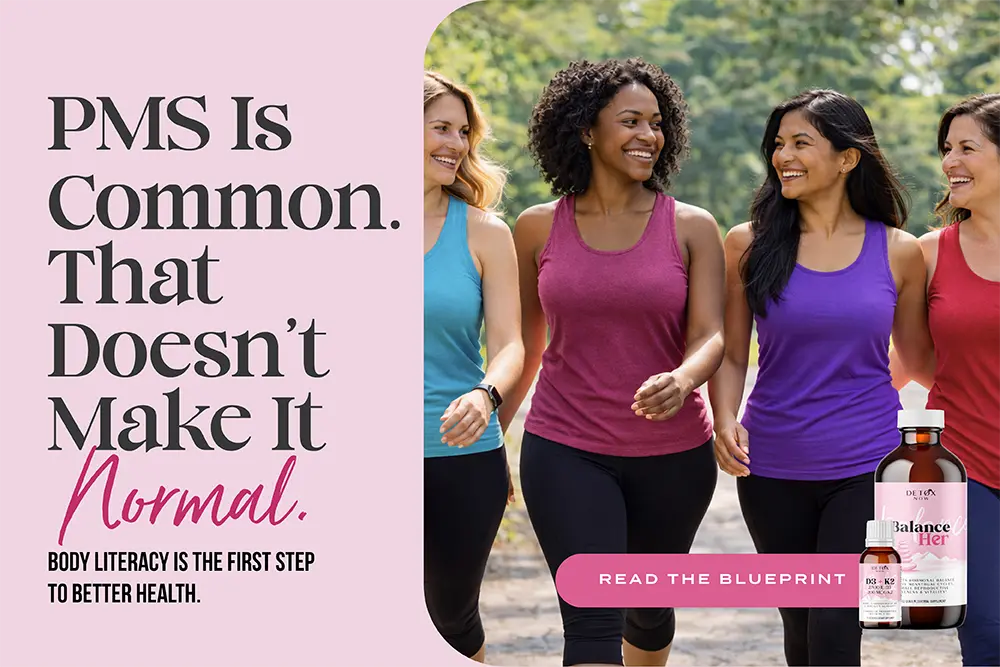
So yes, PMS is common.
So are heavy periods, painful cramping, mood swings, fatigue, brain fog, bloating, and cycle irregularities.
But many of those symptoms are signals, and signals have sources.
The Women’s Health Spectrum: From PMS to Menopause
Women move through hormonal seasons, and each season comes with predictable shifts, but predictable doesn’t mean you have to suffer through it.
The PMS / Reproductive Years
Common signals include:
- breast tenderness, headaches, irritability
- acne, cravings, bloating
- heavy bleeding or clotting
- pelvic pressure or pain
- anxiety spikes before your period
- low energy that feels like “something is off.”
The “Quiet Middle” (Where Many Conditions Start Whispering)
This is where many women begin noticing:
- worsening cycles year after year
- increasing inflammation symptoms
- stubborn weight gain
- fatigue that doesn’t match effort
- pain becoming more frequent
Perimenopause & Menopause
Many women experience:
- sleep disruption
- mood changes (irritability, anxiety, sadness)
- hair thinning and loss
hot flashes, night sweats - libido changes
- brain fog
- weight redistribution
- “I don’t feel like myself.”
These are not signs you’re failing.
There are signs your body is transitioning, and transitions require support.
Fibroids, Cysts, Endo, and Adenomyosis Are Not “Random”; They Live in a Pattern
We’re not going to oversimplify complex conditions.
But we are going to tell the truth: many women’s reproductive conditions share common threads, including:
- inflammation (systemic, not just localized)
- hormonal imbalance (often involving estrogen/progesterone dynamics)
- detox pathway stress (how the body processes hormones and waste)
- nutrient depletion (especially foundational deficiencies)
- stress load + recovery issues (sleep, nervous system, burnout)
While fibroids, cysts/PCOS, endometriosis, and adenomyosis are not the same, they often co-occur in the same anatomical environment.
That’s why a lifestyle approach works:
It supports the environment, not just the symptom.
The Women’s Health Blueprint: DeTox, Balance, Prevent

1) DETOX: Reduce the Burden
When women feel: heavy, inflamed, stuck, bloated, fatigued, “my body feels overwhelmed”…That’s often a sign that the body needs support in processing what it’s carrying.
TDN Product Pathway:
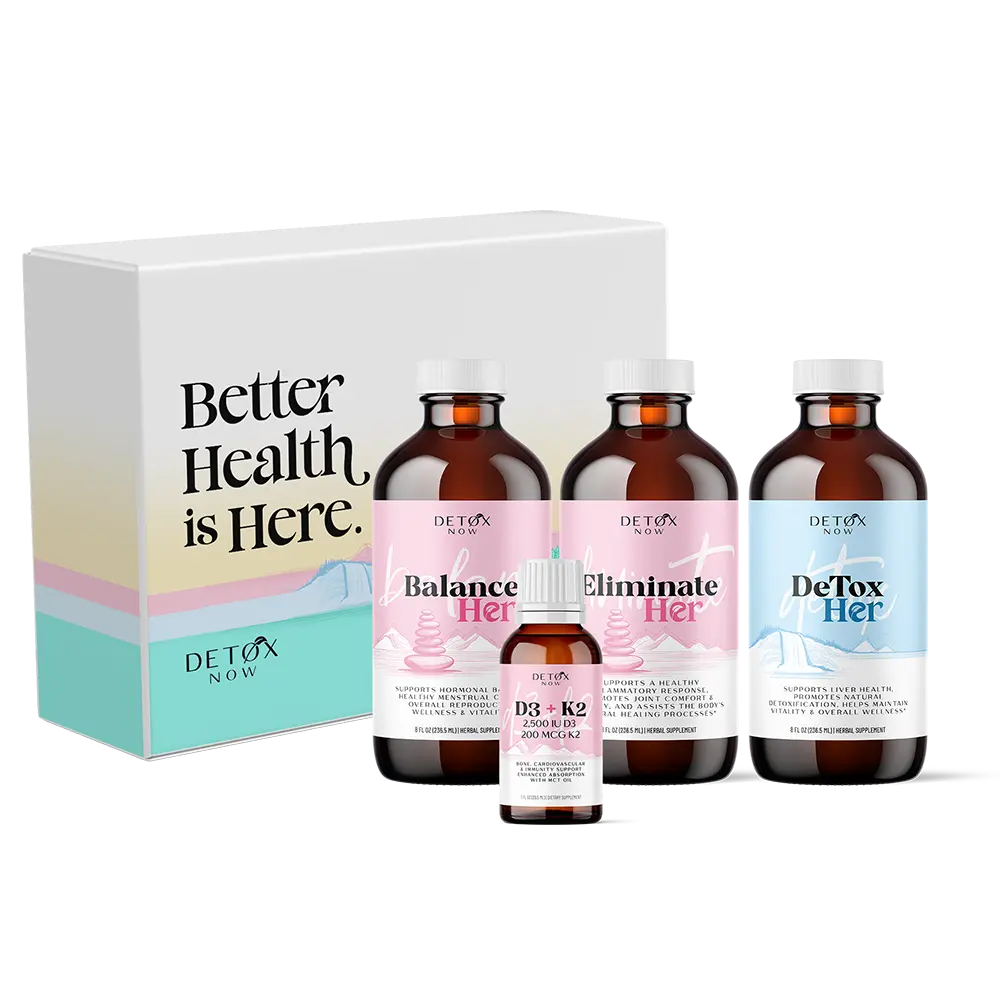
DeToxNow RESET Kit, foundational support to reset and reduce burden.
DeToxNow RESET Kit
2) BALANCE: Support Hormone Alignment
This is where we focus on stability: cycle support, mood support, energy consistency, and reproductive alignment.
TDN Product Pathway:
BalanceHer Kit, for women navigating PMS symptoms, cycle concerns, hormonal imbalances and issues such as Fibroids, Cysts, Endometriosis, Adenomyosis, and severe Perimenopause/Menopause symptoms
BalanceHer Kit
3) PREVENT: Daily Long-Game Support
Prevention is what we do when we decide:
“I’m not waiting until it gets worse.”
TDN Product Pathway:
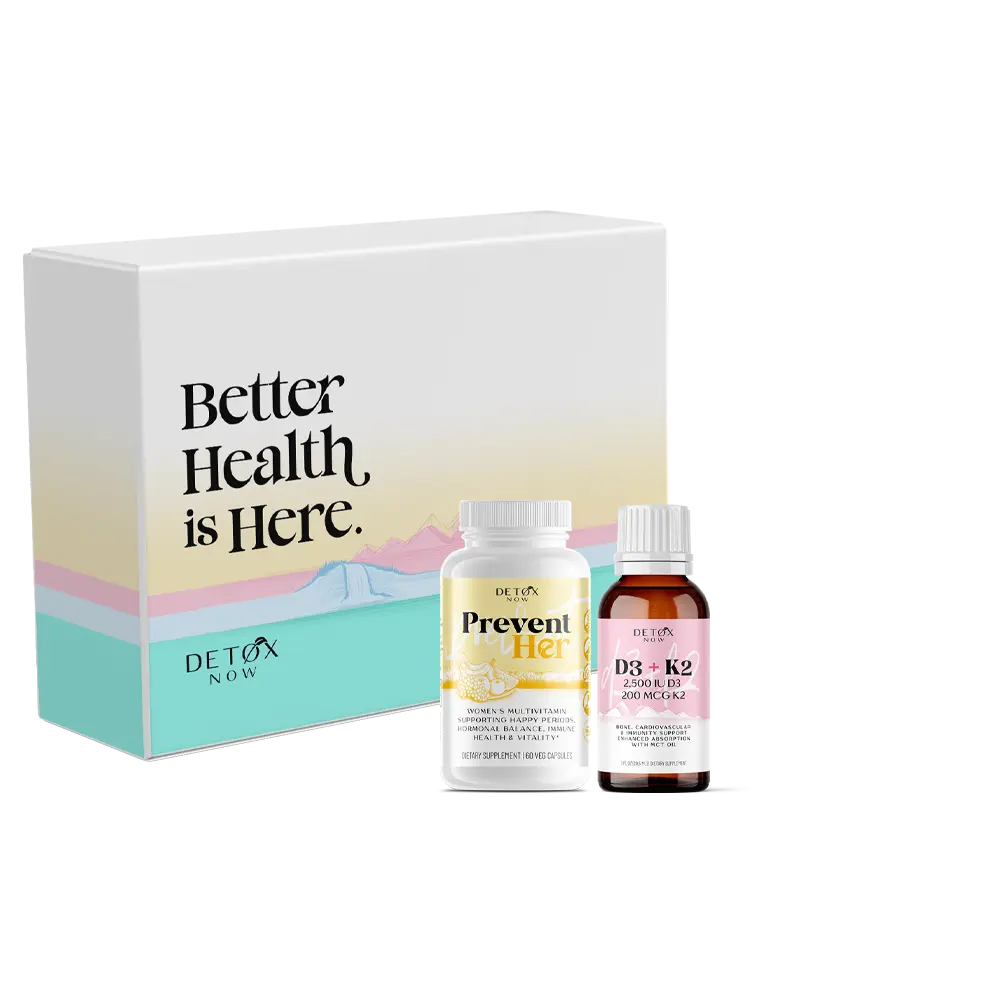
PreventHer Kit, daily support to protect your future self.
PreventHer Kit
The Missing Link Many Women Don’t Know
to Ask About, D3 + K2
If you’ve been following women’s health conversations long enough, you’ve probably heard about: hormones, stress, gut health, and inflammation.
But one of the most common gaps affecting all of those is Vitamin D status.
We’re not calling it a magic pill; we’re calling it a foundation.
Because D3 is connected to:
- immune regulation
- inflammation response
- mood support
- energy metabolism
- long-term preventive wellness
- brain health
- hormonal balance
- bone strength
And when you combine D3 with K2, the conversation becomes even more supportive for women especially around cardiovascular protection and bone health.
This is why we’re bringing the D3+K2 education into March, because it supports every week of this campaign.
Where to Start (Without Overwhelm)
If you’re new to the lifestyle, don’t start with 10 changes.
Start with a decision:
I’m going to support my body in the right order.
If your symptoms are loud: start with DeToxNow Kit, BalanceHer Kit
If you’re in a prevention season: start with PreventHer Kit (and layer Balance as needed)
Women’s History Month Is More Than a Celebration,
It’s an Inheritance
May we know healthy women.
May we be them.
May we raise them?
But we can’t raise what we don’t model.
Your next step is simple: choose your starting point and commit to the lifestyle.